Small-batch stoneware · 340 grams · Lead-free glaze

Get The Daily
Woman in a cream sweater holding a steaming stoneware mug by a bright window

One mug, built for ten thousand mornings.

You will hold this object more often than your keys, your phone charger, or your front door. Ten years of mornings is roughly three thousand pours, and every one of them starts with your hand closing around the same weight, the same rim, the same handle. We built The Daily for exactly that arithmetic.

It is 340 grams of base-weighted stoneware with a tapered rim and a two-finger handle, glazed in a certified lead-free gloss that rinses clean. No prints that fade, no gimmicks that date. Just the mug your hand was auditing for all along.

01 — Anatomy

Built like an instrument, not a container

Pick up a mug you love and your hand runs a quiet audit: weight first, then balance, then the rim, then the handle. The Daily is designed to pass that audit on every count. The base carries most of its 340 grams, so it sits planted on the desk but swings light in the hand — the property people call 'nice' without being able to say why.

The rim is thinned relative to the wall and gently tapered, which is why it pours clean and drinks quiet. The handle admits two fingers with knuckle clearance to spare, and springs from the body high enough that skin never meets hot ceramic. None of this photographs well. All of it is why the mug gets reached for.

Hands cradling a warm stoneware mug of coffee at a wooden table by a window

02 — Materials

What the material decides

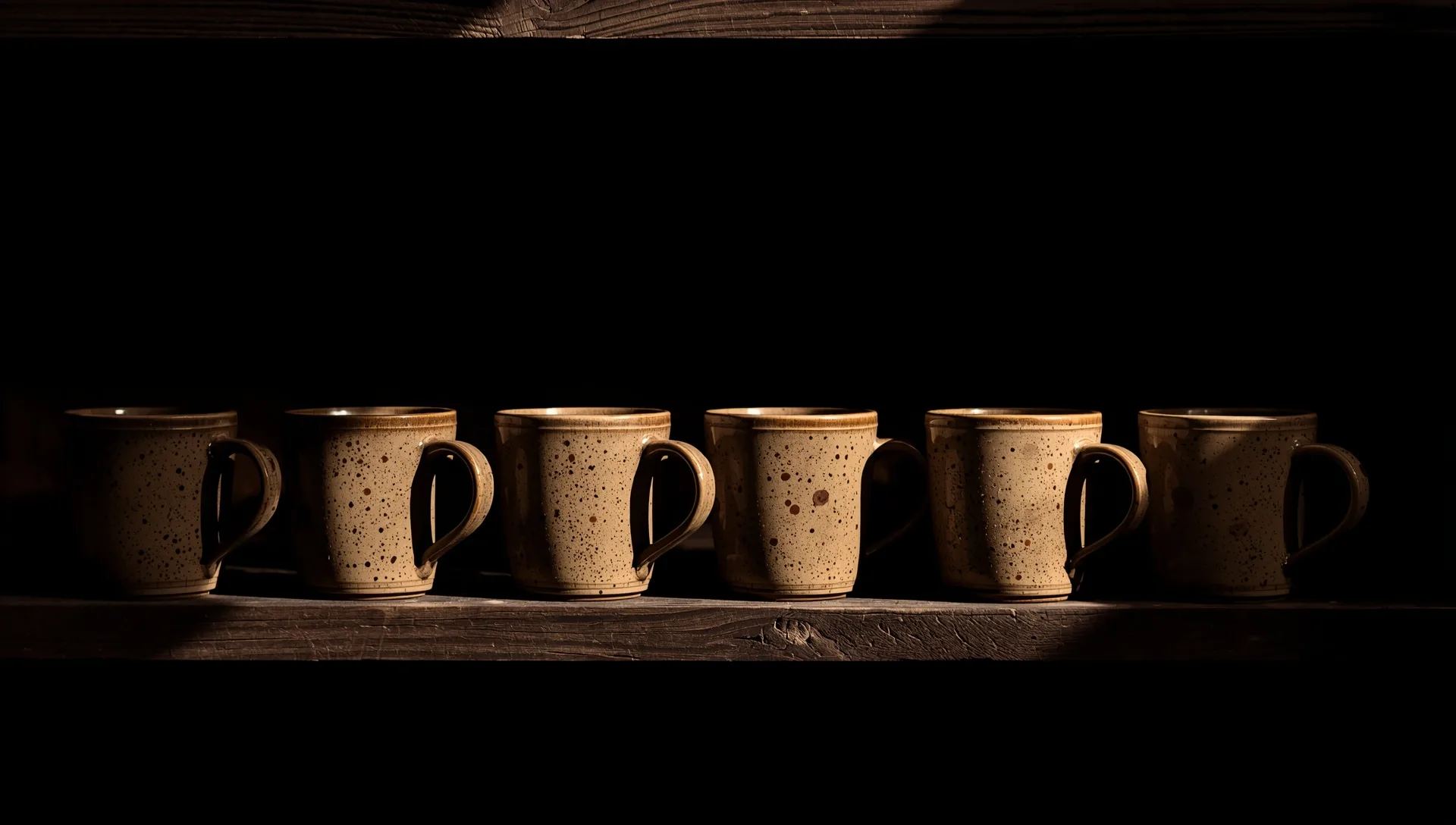
Speckled stoneware mugs on a dark wooden shelf in moody workshop light

Why stoneware

Stoneware is fired dense at around 1,220 °C, which makes it naturally insulating, comfortable with dishwashers, and heavy in the reassuring way. Its thicker walls slow heat loss — the right physics for a cup that has to survive a morning of meetings. Nearly every mug people describe as their favorite turns out to be stoneware. Ours is no accident.

The clay body

We use a speckled buff stoneware body with low porosity and high thermal mass. Fired to full vitrification, it does not wick water, does not stain from the inside out, and shrugs off the temperature swing from dishwasher to hot pour. The speckle is iron in the clay, not decoration — it comes out of the kiln, not off a printer.

The glaze you drink from

Glaze is glass melted onto clay, and it is the surface your coffee actually touches. Ours is a glossy, fully fitted, lead-free and cadmium-free glaze — tested and stated plainly, not implied. A well-fitted gloss is functionally nonstick for coffee oils, which is why The Daily rinses clean when printed mugs are doing espresso archaeology in their scratches.

Steam rising from a tall narrow stoneware mug of black coffee in morning light

03 — Physics

Why your coffee goes cold — and why this one doesn't

Coffee loses heat four ways: evaporation from the surface, radiation and convection from the walls, and conduction into the cold mass of the mug itself. The first pour into a room-temperature mug can shed several degrees to the ceramic in the first minute. The highest-leverage fix costs nothing — thirty seconds of hot tap water in the mug before the coffee goes in.

Geometry does quiet work too. The Daily's mouth is deliberately narrower than the diner-cup flare, exposing less surface to evaporation, the dominant cooling channel of an uncovered drink. A tall-ish, narrow-ish mug keeps coffee warmer than a wide shallow one of identical volume. Every curve on this mug is that sentence, applied.

Preheated, the thick stoneware walls flip from enemy to ally: a heat reservoir working in your favor. The full stack — preheat, thick stoneware, narrow mouth — keeps a cup drinkably warm for the better part of an hour with zero electronics. The warming-coaster industry is mostly selling a solution to an unpreheated mug.


04 — Craft

Made by hands that have made thousands

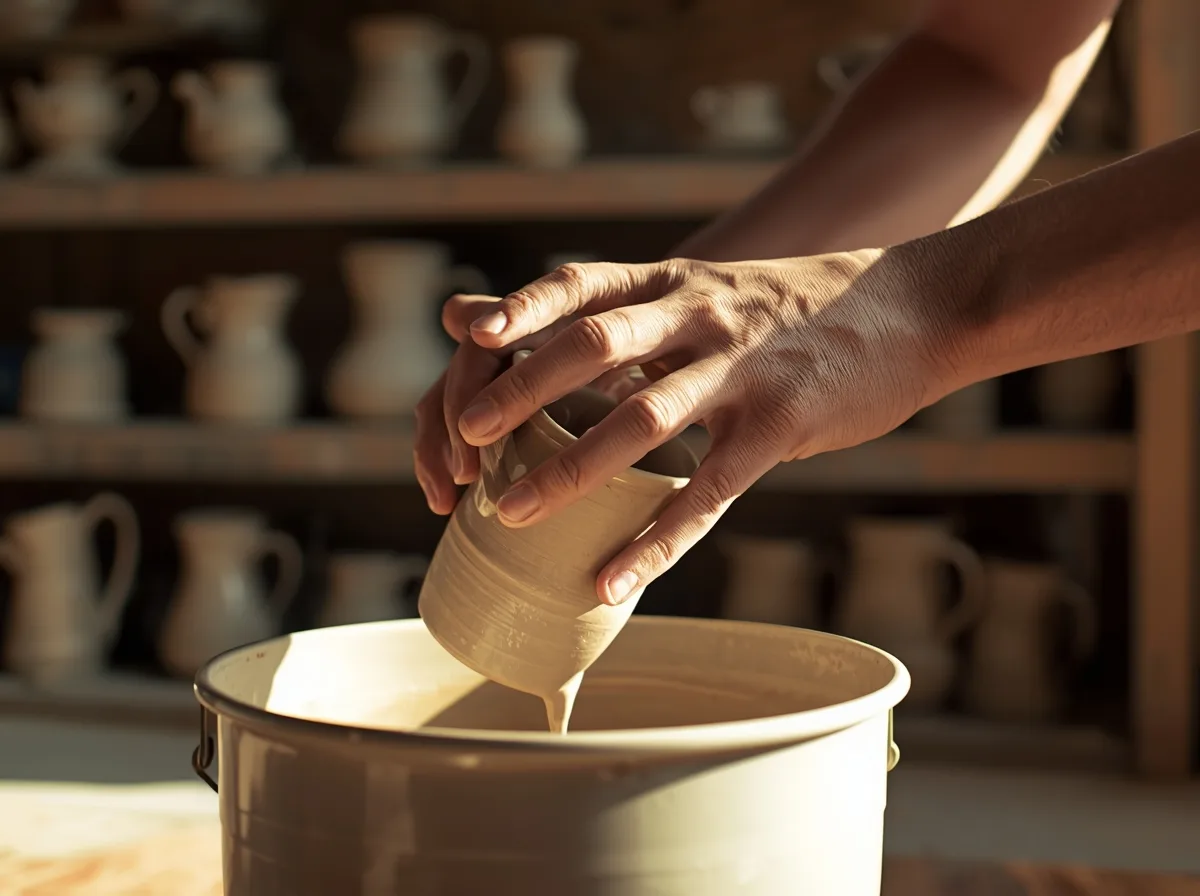
The Daily is thrown and glazed in small batches by a workshop that has been pulling handles longer than we have been alive. Small-batch does not mean precious: it means a person checks the rim of every mug against a gauge, and the ones that miss become seconds, not shipments.

You can read the making in the finished object — faint throwing rings under the glaze, a handle joint smoothed by thumb rather than mold, the slight character variations of a kiln that holds real fire. Each mug is the same spec and a slightly different individual, which is exactly the balance we want on a shelf.

This is also why we sell The Daily singly, not in sets. A daily driver is personal equipment. Buy one, live with it, and if your household starts fighting over it at 6 a.m., buy a second — that fight is the product working.

Potter's hands glazing a ceramic mug in a workshop

05 — Mornings

Four mornings, one mug

  • Woman in a morning kitchen pouring coffee from a kettle into a stoneware mug

    The first pour

    Six-forty in the kitchen, kettle just off the boil, the day not yet allowed in. The first pour is the one The Daily was tuned for — preheated ceramic taking the coffee without stealing its degrees, the base-weighted body steady on the counter while you're still half asleep.

  • Couple sitting on a wooden porch holding stoneware mugs of coffee

    The slow Saturday

    The weekend cup is a different discipline: longer, slower, carried outside. Thick stoneware walls earn their keep on a cool porch, holding the second half of the cup at drinking temperature while the conversation gets to the good part.

  • Man at a bright desk reaching for a stoneware coffee mug beside his laptop

    The working cup

    At the desk, a mug is furniture — picked up and set down forty times without a glance. This is where the planted base matters: a center of gravity that forgives careless reaches and a handle your fingers find without looking. The keyboard has enough enemies.

  • Friends around a breakfast table with coffee mugs, laughing together

    The full table

    When the table fills up, the mugs come out in numbers, and the good one disappears first. We take that as the honest review: not stars, not quotes — just the quiet speed with which a hand chooses the mug that feels right and refuses to give it back.

06 — Philosophy

One mug is a philosophy

The cupboard of chaos — eleven mugs, three loved, the rest conference swag — is the default state of adulthood. We hold the opposite position: a working shelf is small, and every slot is earned by being reached for. Start with one mug you would mourn. Everything else is guests.

That is why this shop sells one mug, properly, instead of forty variations approximately. Weight and handle fit cannot be photographed, so we publish the numbers instead — grams, rim thickness, finger clearance, glaze certification — and let the spec be the pitch. Adjectives are what a listing uses when it has nothing to measure.

And when a keeper finally goes — they all go — let it matter slightly. Ten years and three thousand mornings is a serious term of service for eighteen dollars of fired clay. The correct memorial is buying the next one with everything the last one taught you.

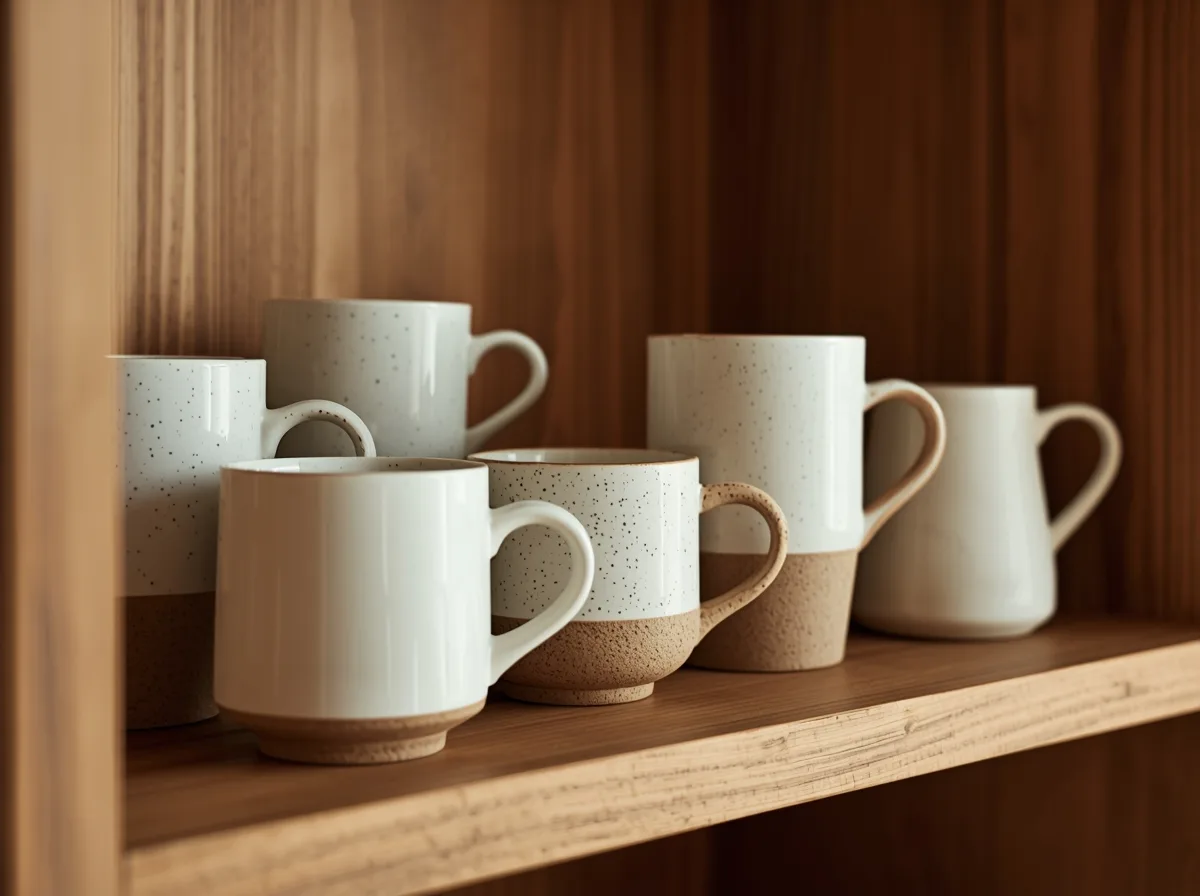
A shelf of varied ceramic coffee mugs in stoneware, porcelain, and bone china
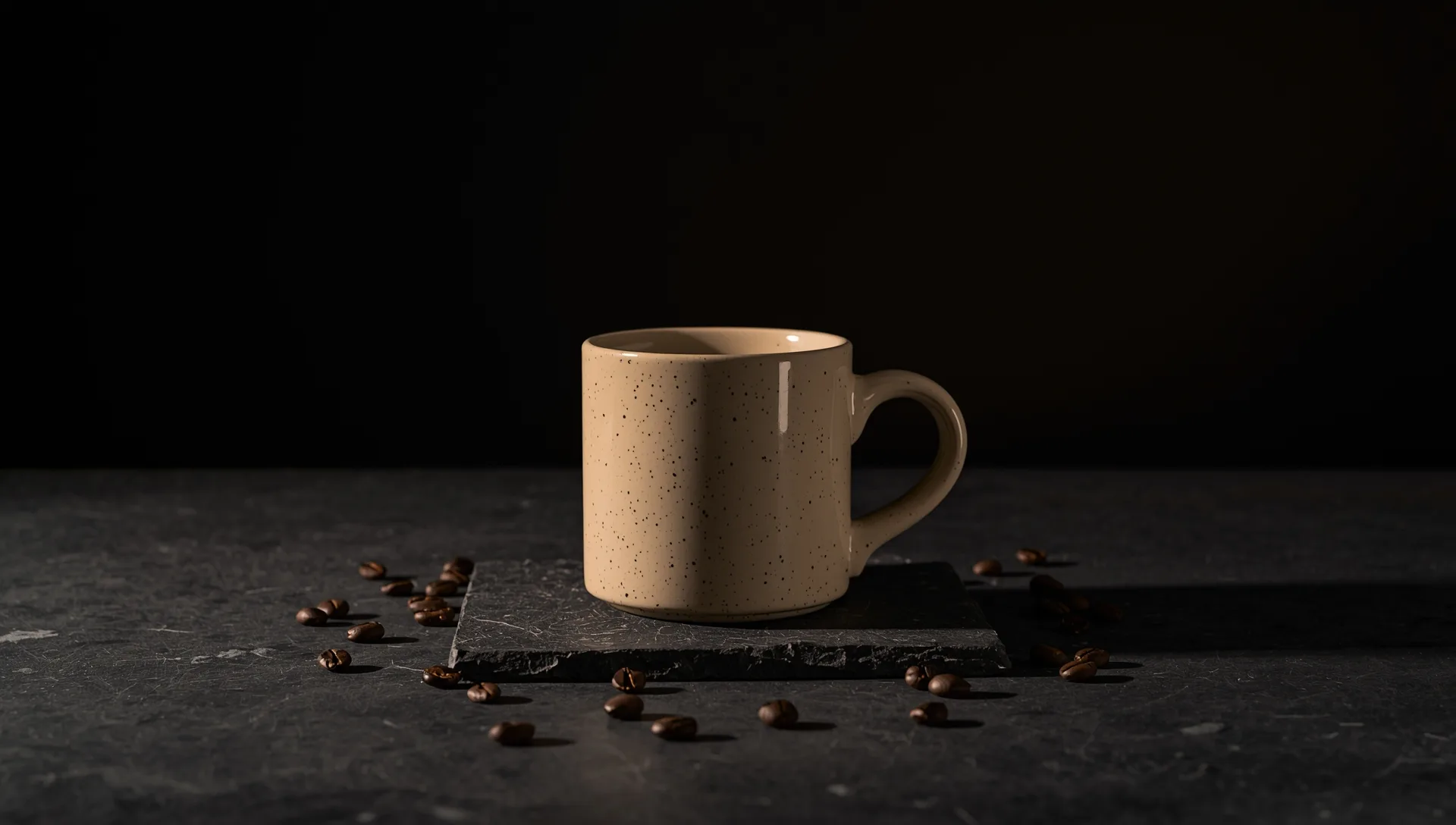
Studio shot of a speckled stoneware mug on dark slate with coffee beans

The Daily

The Daily — 350 ml Stoneware Driver

Our whole catalog, in one object: 350 milliliters of speckled stoneware built to the spec this page just taught you to demand. Sold singly, because daily drivers are personal. Eighteen dollars, ten years, three thousand mornings — the math works.

Our house stoneware mug built to this page's own spec: 340 grams empty, base-weighted, tapered thin rim, two-finger handle with knuckle clearance, glossy lead-free glaze that rinses clean. Sold singly, because daily drivers are personal.

  • 340 g, base-weighted — planted on desk, lively in hand
  • Tapered rim — thinned from the body wall for a clean, quiet sip
  • Two-finger handle — full knuckle clearance, no hot-ceramic contact
  • Certified glaze — lead-free, cadmium-free gloss; dishwasher safe
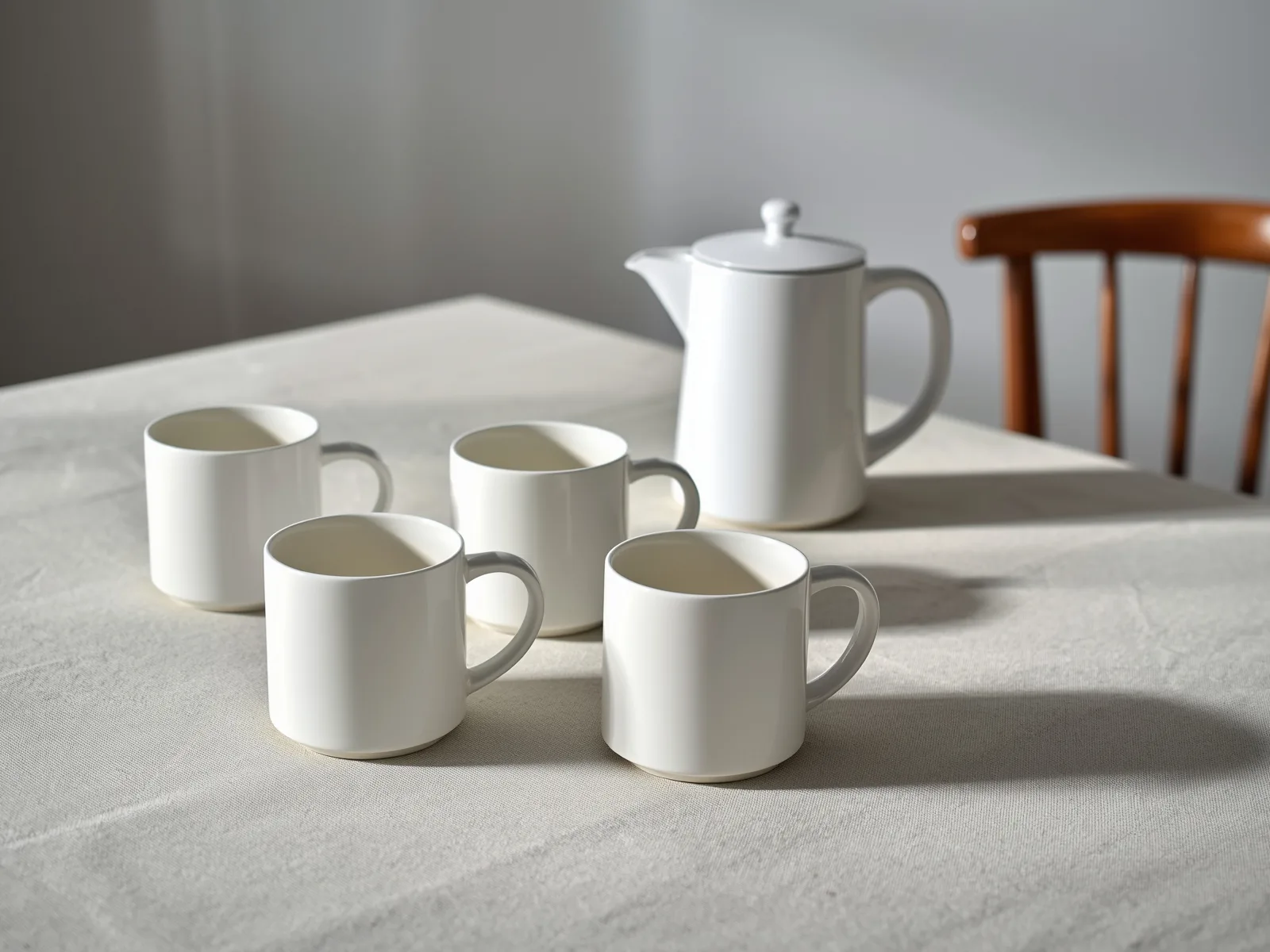
Set of four matching white porcelain mugs on a linen tablecloth

For the visiting half of the shelf

The Guest Set — 4 × 300 ml Porcelain

The Guest Set exists because guests exist: four matched 300 ml porcelain mugs with a thin elegant lip and a fast warm-up, stackable into a single shelf slot. Consistent to the gram, replaceable when one breaks — the set that makes a cupboard look like a decision.

  • Four matched 300 ml porcelain mugs
  • Thin drinking lip, fast preheat
  • Stackable — one shelf slot, four mugs
  • Dishwasher and microwave safe (no metallic trim)

07 — Gifting

The gift that gets held three hundred mornings a year

A bad gift mug is a joke printed on a cylinder: the pun ages in a week and the print dishwashers away in a year. A good gift mug is one of the best gifts there is, because the recipient will hold it three hundred mornings a year while thinking, briefly and involuntarily, of you.

The intelligence-gathering step: look at what they already reach for, then match the pattern and upgrade the execution — same size class, meaningfully better rim, glaze, and handle. Skip the personalization; a name on a mug assigns it to display duty. The highest honor a mug can receive is being fought over at 6 a.m. by people who forgot where it came from.

What we stand behind

Certified glaze

Lead-free and cadmium-free, tested and stated plainly on every batch. The surface your coffee touches is the part we refuse to be vague about.

Machine-proof

Dishwasher and microwave safe, no metallic trim to arc, no print to fade. The Daily is equipment, and equipment survives the machines it lives with.

Honest spec

Every listing publishes grams, rim thickness, and finger clearance instead of adjectives. If a number would help you decide, we print the number.

08 — Questions

Your questions, answered with numbers

Choosing a daily mug is a ten-year decision disguised as an eighteen-dollar one, so the questions deserve real answers. Everything below comes from the same place as the rest of this page: material science, kiln experience, and the strong opinion that a spec beats an adjective.

If your question is not here, write to us. The address at the bottom of the page reaches people who genuinely enjoy talking about fired clay.

Is 350 ml the right size for me?

For a standard drip or pour-over morning, yes — 300 to 380 ml is the sweet spot. Espresso-based drinks want smaller cups, and only committed all-morning nursers should go bigger; volume without preheating is just more coffee going cold.

Why does an $18 mug beat a $6 one?

The money is in the parts you touch: better clay fired to full density, a glaze that fits the body so it never crazes or stains, and a rim and handle someone actually gauged. Past the mid-tier, price stops predicting function — below it, function is exactly what's missing.

Does the mug really change how coffee tastes?

Mostly through geometry and temperature, not material myths. A narrow, thick, preheated mug delivers coffee hotter and directs aroma at your nose; a wide, cold, shallow one delivers it tepid and dispersed. The rest is attention — a mug you love makes you notice the coffee, and that part is real too.

How do I keep it stain-free?

A paste of baking soda and water, ten minutes of sitting, a soft sponge — weekly for heavy users. The glossy fitted glaze does most of the work; if any mug re-stains within days no matter what, its glaze is crazed and holding oils, and it has told you its retirement plans.

Dishwasher and microwave — genuinely safe?

Yes and yes. Full vitrification plus a fitted glaze means the dishwasher holds no fear, and there is no metallic trim to arc in the microwave. The mugs to keep out of both are hand-decorated, gold-rimmed, or already cracked — steam finds hairline cracks faster than eyes do.

What if it chips?

A chip on the base or handle is an honorable scar. A chip on the rim is a retirement notice — it exposes unglazed clay where your mouth lands. If The Daily arrives with any chip, we replace it without a return dance; a photo to our address is enough.

Where is it made?

Thrown and glazed in small batches in a single workshop, gauge-checked by hand, and fired to about 1,220 °C. Small-batch means a person, not a sensor, decides whether each mug ships — the seconds stay behind.

The Sunday Digest: one considered email

Restock notices, one care technique, and one unreasonably deep dive into fired clay — weekly, short, and written by hand like everything else here.